Targeted Repair
- Leak Pattern
- One or two entry points
- Insulation
- Dry around the leak
- Deck
- Firm, no rust-through
- Seams And Edges
- Holding past the damage
- Next Step
- Patch, flash, and water-test

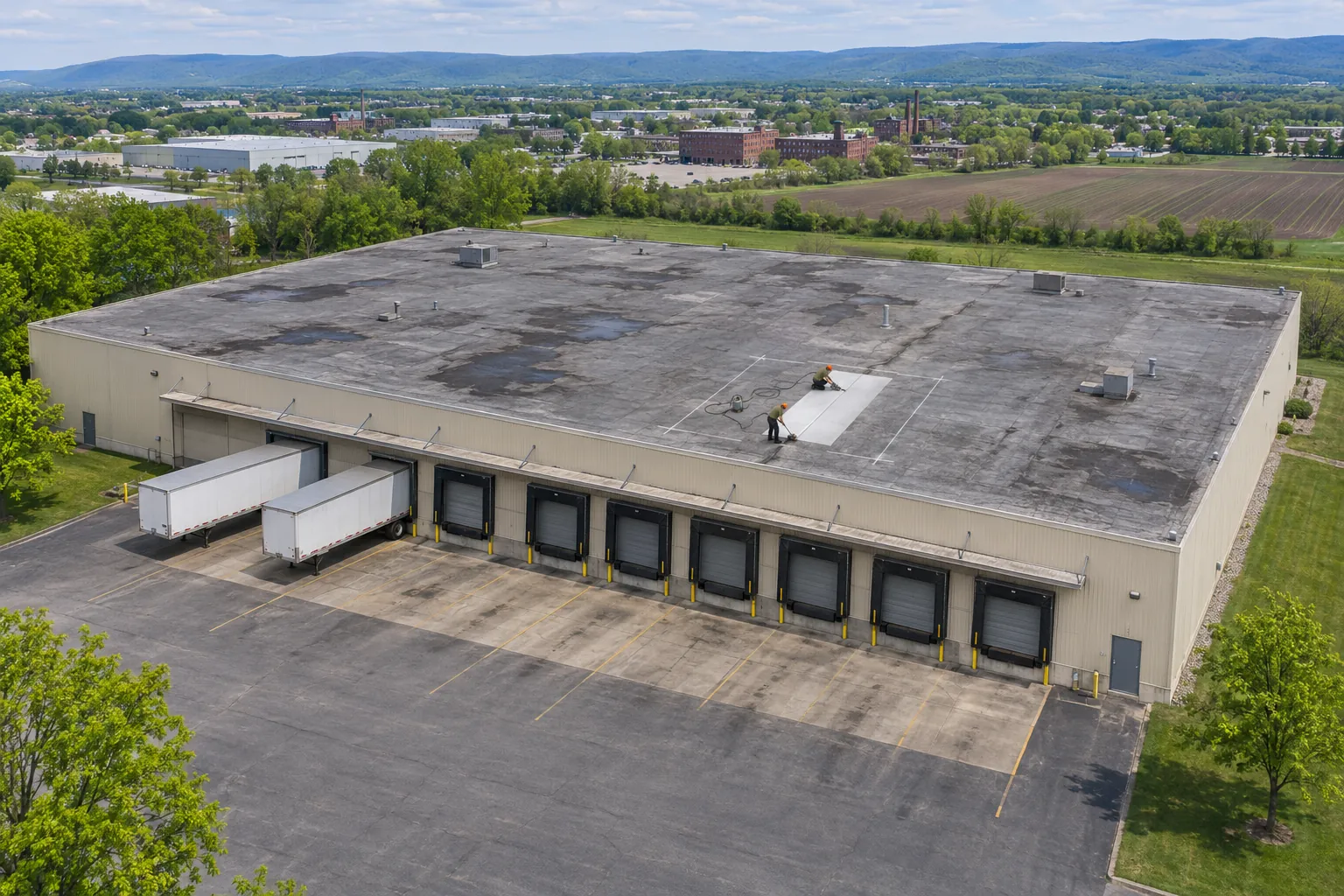
As a Harrisburg commercial roof repair contractor, we trace leaks, open wet areas, and repair flat, metal, and industrial roofs over occupied buildings.
Most calls for Harrisburg commercial roof repair begin with one of these conditions. The chip beside each one shows how soon it needs attention.
A brown ring that grows after each storm means water is reaching the deck and insulation before it shows inside.
Ponding that stays two days after rain points to a clogged outlet, a sagging deck, or crushed insulation around the drain bowl.
Loose fasteners and split washers on a metal shop roof let water ride along the panel ribs into the purlins.
Water landing on inventory, electrical panels, or a production line calls for a temporary dry-in while the source is traced.
Lap seams and patch edges that split during freeze-thaw swings let meltwater in at the same spot every spring.
Most roofs we inspect need a targeted repair. These columns show what we find before recommending a section rebuild or a full replacement instead.
We repair four kinds of commercial roof problems in Harrisburg. Each row shows the roofs it fits and what to watch for before the repair starts.
Membrane and built-up roofs on warehouses, strip centers, and offices. We patch split seams, rebuild drain connections, and replace wet insulation found by core cuts.
Ribbed and standing-seam roofs on shops and storage buildings. We reset fasteners, rebuild open laps, swap rusted panels, and reflash pipe boots.
Leaks over offices, stores, and warehouses are traced across the roof and the ceiling grid before any opening is sealed or cut.
Plant and processing roofs with fans, stacks, and curbs, repaired around production schedules, exhaust discharge, and safe rooftop access.
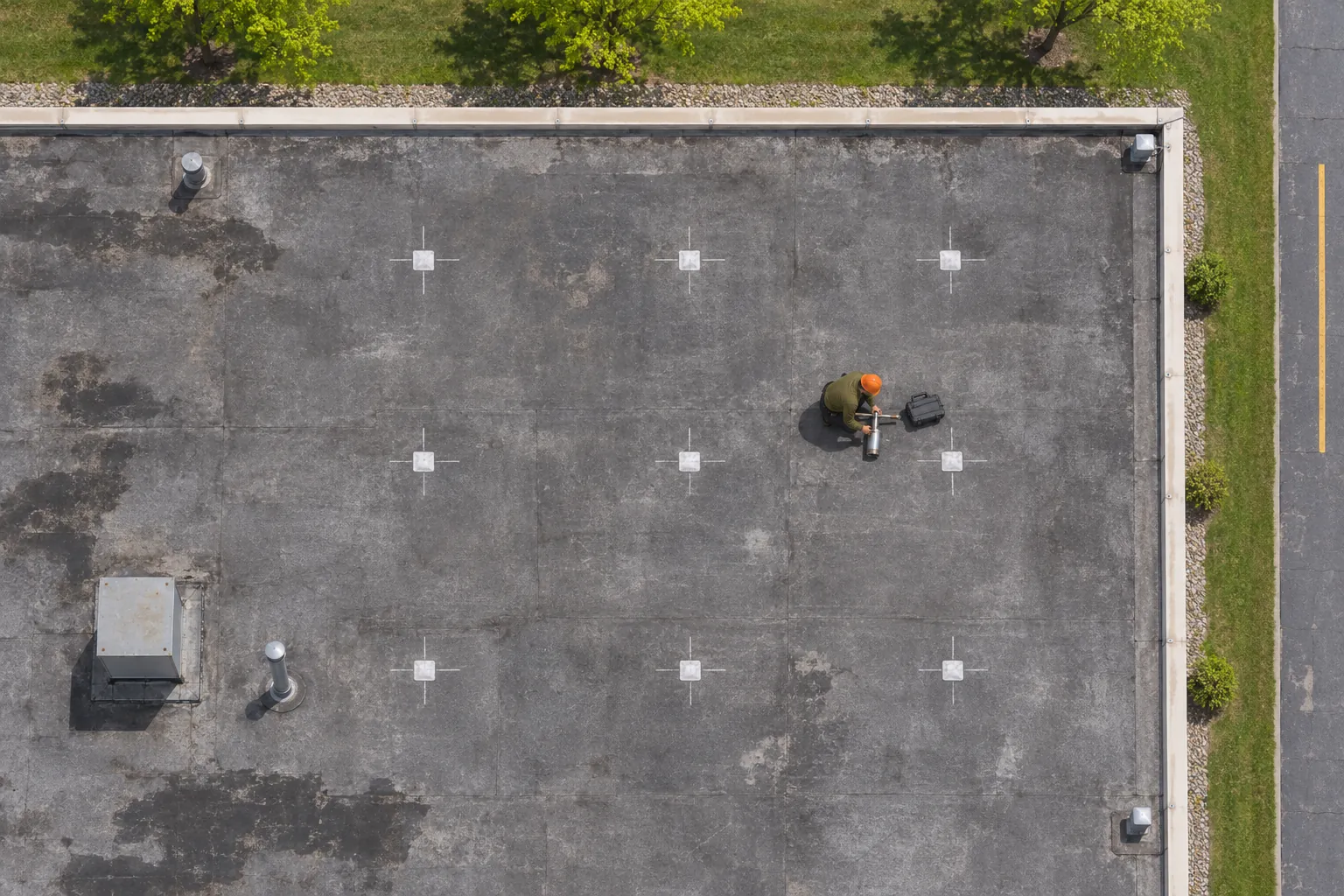
Tell us the building type, the roof system if you know it, and where water shows up. We will book an inspection and send written findings.
Four steps take a roof from a reported leak to a tested repair, with photos at each stage.
We compare the interior stain, rain timing, and the roof above it, then walk the seams, drains, curbs, and flashing past the obvious spot.
Core cuts and probing show how far moisture has spread in the insulation, so the repair boundary lands on dry, firm roofing.
New membrane, flashing, or panels are bonded or fastened to firm material beyond the damage, with drains and edges rebuilt where needed.
Repaired seams and curbs are checked with water where practical, and you receive photos and notes on what was found and fixed.
A repair sized to the actual damage keeps spending tied to the roof you have. These are the practical gains owners see.
Paying for the wet bay and its flashing costs less than tearing off dry roofing that still holds.
Stopping a drip over racks or a server room protects what sits under the roof between storms.
Repairs are staged by roof section, so loading docks and office floors under dry areas keep running.
Photos and written findings give landlord and tenant the same roof facts when repair costs come up.
Is your building near Harrisburg? We repair commercial roofs across the towns below; for anywhere else, call us or send us a message.
Downtown offices, older brick blocks, and logistics warehouses, with flat and metal roofs repaired section by section.
Distribution warehouses where moved racks change where a leak shows, so each report is matched to the roof above.
Office buildings where split edge flashing gets repaired back to a firm stretch of membrane and edge metal.
Warehouse roofs where a drain leak after nearby work is traced through the flashing, the bowl, and the piping.
Occupied offices and shops, where clear leak reports and safe interior access shape the roof visit.
Older commercial roofs carrying unused curbs that get removed and closed with matched deck and insulation.
Short answers to the roof questions owners ask most, grouped by topic.
Repair usually wins when the leaks come from a few entry points and the insulation around them is dry. Replacement moves up when core cuts find wet material across large areas, fasteners have let go, or the membrane is too brittle to hold a new seam. We map every finding against the leak history before recommending either.
Yes, when the section edges meet firm, dry roofing and its drains are checked along with it. We inspect the neighboring bays first, then set the boundary. The rebuilt section includes any wet insulation or damaged deck inside it, so the new covering sits on solid material instead of hiding the problem.
The lease decides who pays, so landlord and tenant should read the roof clause before work is authorized. We document the roof condition and the proposed repair so both sides discuss the same scope. We stay out of interpreting the lease itself, and damaged stock or insurance questions stay separate from the roof findings.
Yes. Water often runs along the deck, a purlin, or a tapered insulation board before it drips, so the stain can sit well away from the entry point. We compare the drip location with the seams, drains, and equipment above it, then keep inspecting past the obvious area until the path makes sense.
Freeze-thaw swings open joints that were already weak, so the crack usually traces back to poor adhesion, trapped moisture, or patch material that never matched the roof. We check those first. A bigger patch over the same problem just moves the next split a few feet over.
They can. Ice in a drain bowl backs meltwater over seams it normally never reaches, and wet insulation keeps dripping after the surface clears. Once the roof is safe to walk, we inspect the drain path and nearby seams and size the repair to how far the moisture spread.
Send the address and where the water shows up, or call. We set the inspection around your tenants and deliveries.


